
Remote work is here to stay. Here's when a California backyard office needs a permit, how it differs from an ADU, and what it costs.
The short answer
Remote work stuck: 35% of employed people in the U.S. did some or all of their work at home on days they worked in 2025. In California, a backyard office without a kitchen is usually an accessory structure, not an ADU. If it's one story and 120 sq ft or less, it can skip the building permit, but new wiring still needs one.
of U.S. workers teleworked in September 2026 (BLS, Current Population Survey)
of California workers mainly worked from home in 2024 (Census, ACS 1-year)
size limit for a one-story detached structure to be exempt from a building permit (2025 California Residential Code R105.2)
all-in price of Bay Modular's 8' × 15' Backyard Studio, October 2026
In 2020, we opened pre-orders for our first backyard studio, as offices emptied and kitchen tables turned into desks. Nobody knew if working from home would last a summer or a decade.
Six years later, the data has an answer: it lasted. Many people still do it from a spare bedroom. This guide covers how many people work from home now, when a backyard office needs a permit, where an office ends and an ADU begins, and what a finished studio costs.
Is working from home here to stay?
Yes. About one in five U.S. workers teleworks in a given week, and the monthly rate has stayed between 21.6% and 23.0% since September 2025, according to the Bureau of Labor Statistics (BLS).

Federal surveys measure it three ways:
| Measure | What it counts | Latest number |
|---|---|---|
| BLS Current Population Survey | Teleworked or worked at home for pay at any time during the survey week | 21.9% (September 2026) |
| BLS American Time Use Survey | Did some or all of their work at home on days they worked | 35% (2025) |
| Census American Community Survey | Usually worked from home instead of commuting | 13.3% U.S., 14.1% California (2024) |
Sources: BLS Table A-41 (October 2, 2026); BLS American Time Use Survey (June 25, 2026); Census ACS 2024 1-year, Table DP03. 2025 ACS data isn't out yet.
About half of remote workers are hybrid. In September 2026, 49% of people who teleworked did so for all of their hours; the rest worked from home for only some of their hours. Education matters too: the BLS reports that in 2025, "Fifty-one percent of employed people with a bachelor's degree or higher performed some work at home on days worked."
What this means for you: working from home is a long-term pattern, not a pandemic leftover. A real workspace deserves the same planning as any other room.
Is a backyard office an ADU?
Usually not. California law defines an accessory dwelling unit (ADU) as a unit with "complete independent living facilities," including permanent provisions for living, sleeping, eating, cooking, and sanitation. A studio without a kitchen is generally an accessory structure, and your city's zoning rules apply.
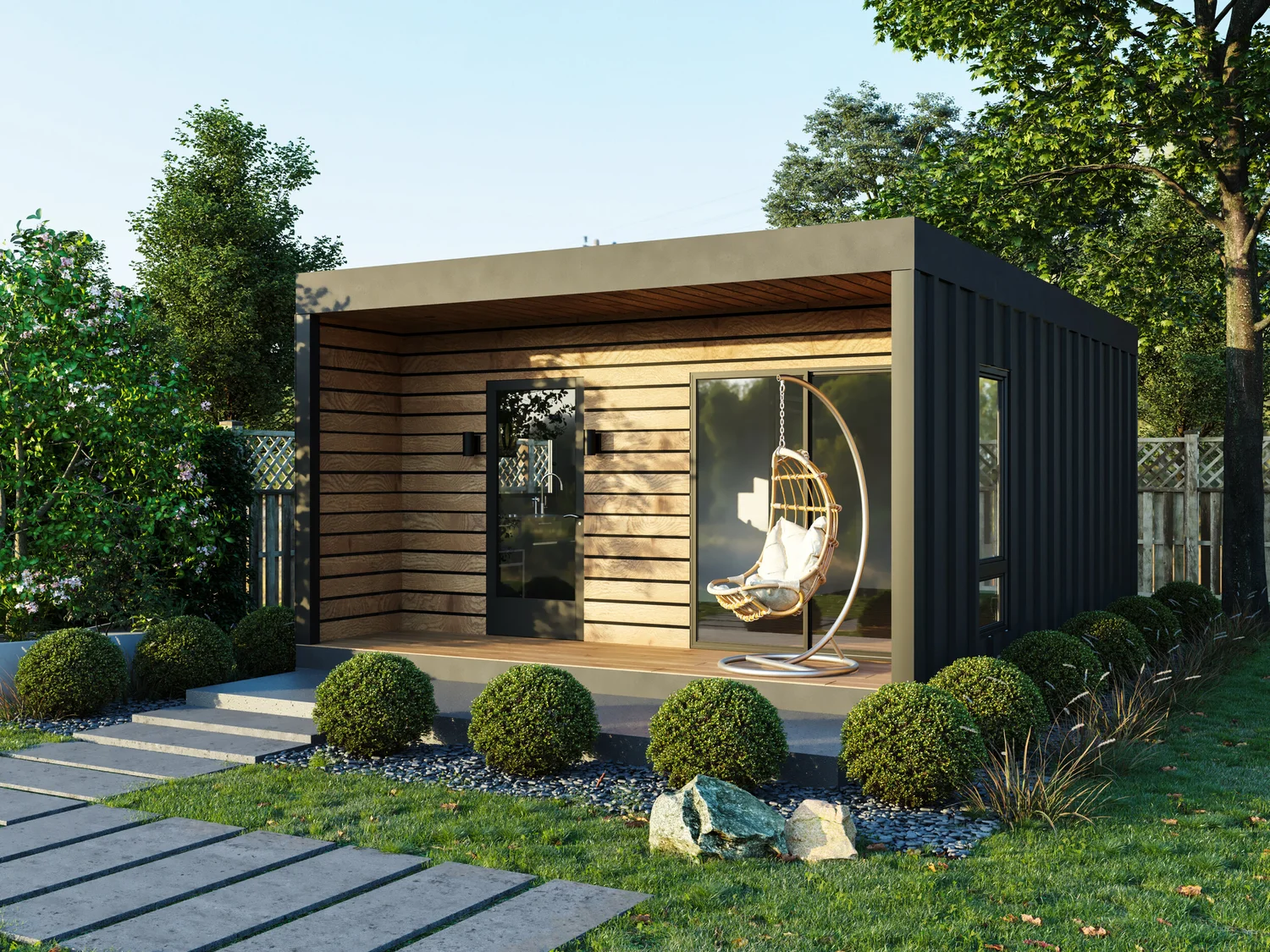
The kitchen decides which rulebook applies:
"A structure that is accessory and incidental to a dwelling located on the same lot." Think office, gym, art studio, or shed. Local zoning sets size, height, setbacks, and what you can put inside.
Gov. Code § 66313(b)A home with its own kitchen and bathroom. State ADU law protects it, including a 60-day review clock.
Gov. Code §§ 66313(a), 66317Local agencies can't charge impact fees on an ADU with 750 sq ft of interior livable space or less.
Gov. Code § 66311.5; HCD ADU Handbook, March 2026An office-only studio is simpler and cheaper. An ADU costs more, but it can later house a parent, a grown kid, or a long-term tenant. See our quick guide to ADU types.
Watch out
Adding a hot plate and a bed to a permitted "office" later can turn it into an unpermitted dwelling. If someone might live in it one day, plan an ADU from the start.
Do you need a permit for a backyard office in California?
For the structure itself, maybe not, if it's one story, detached, and 120 sq ft or smaller. For the wiring that makes it an office, almost certainly yes. And your city's zoning rules still apply either way.
The 2025 California Residential Code took effect January 1, 2026. Section R105.2 lists work that doesn't need a building permit. That list includes "one-story detached accessory structures, provided that the floor area does not exceed 120 square feet." These structures may still be regulated under the state's Wildland-Urban Interface Code.
Three catches matter for a home office:
- Electrical work isn't on the exempt list. R105.2's electrical exemptions cover minor items, like replacing a lamp or low-voltage wiring under 25 volts. Running a new circuit for lights, outlets, and a heater or mini-split is a permit job.
- The exemption isn't a free pass. The code says it doesn't authorize work that violates "any other laws or ordinances of this jurisdiction." Setbacks, height limits, easements, and HOA rules still apply.
- Your city has the final word. Local building and planning departments enforce the code along with their own ordinances, so the answer for your address can differ from the state baseline.
Pro tip
Before you buy, send your city's planning department three facts: the size, the distance from your property lines, and whether it will have power or plumbing. Their answer counts, not a retailer's brochure.
An ADU is more predictable: a complete application must be approved or denied within 60 days, or it's deemed approved (Gov. Code § 66317).
What makes a backyard office comfortable to work in?
Daylight, quiet, enough power, solid internet, and cooling that can handle a California summer. Plan all five before the walls go up.
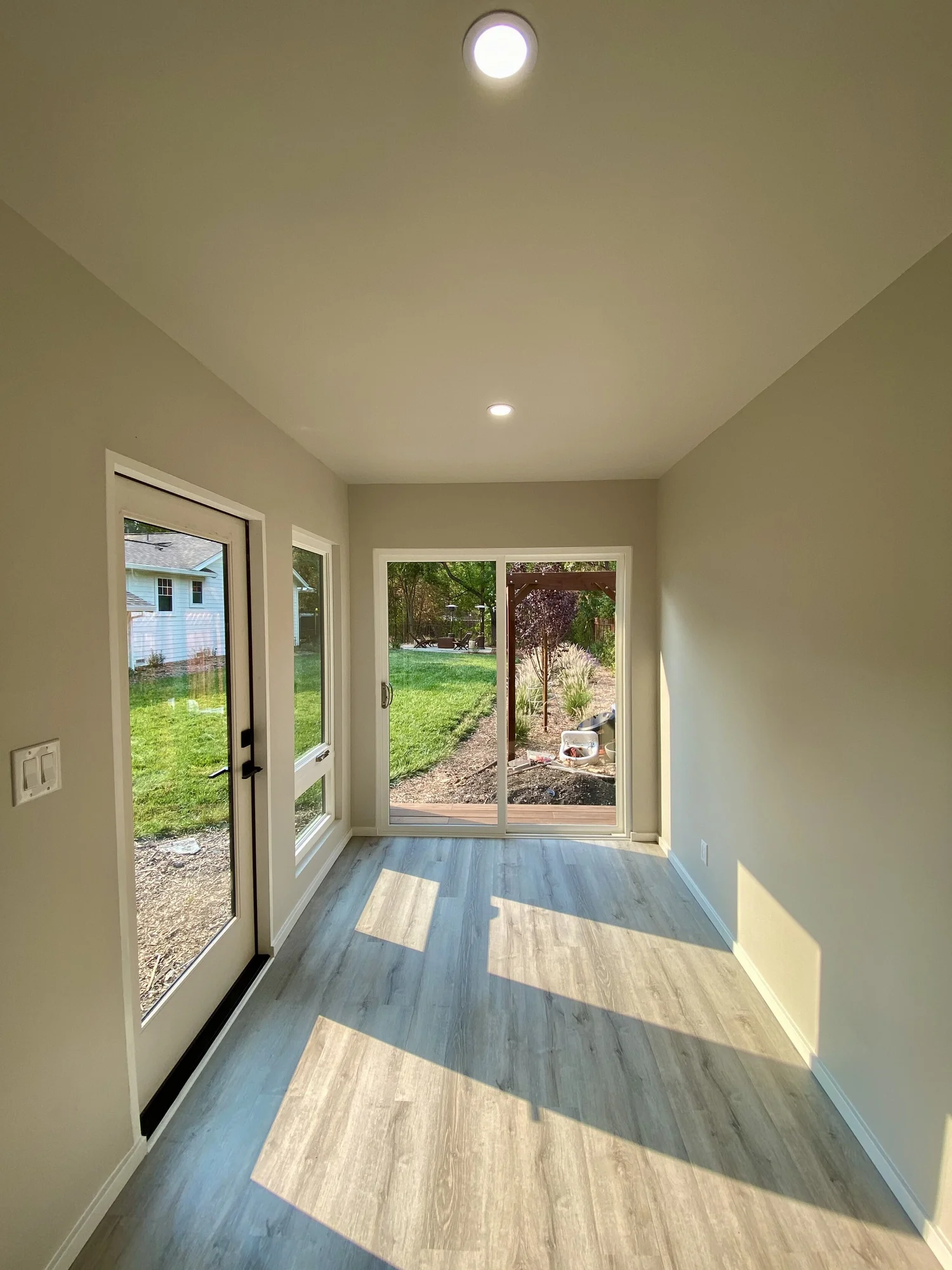
- Light. Windows on two sides, and no bright window right behind your screen. Glass doors make a small room feel bigger.
- Sound. Insulated walls work both ways: you won't hear the leaf blower, and your family won't hear your meetings. Face the door away from the street or your neighbor's patio.
- Power. List everything you'll plug in, heater and AC included, and have your electrician size the circuit for it during the build.
- Internet. Wi-Fi from the house often fades at the fence line. A wired connection or a mesh access point in the studio is more reliable. Ask your electrician about a data line while the trench for power is open.
- Heating and cooling. A small room heats up fast in the sun. A ductless mini-split is a common choice, and shade from trees or a covered deck helps.
How much does a backyard office cost?
With Bay Modular, a finished 8' × 15' Backyard Studio costs $75,900 all in. For an office now and a rentable home later, the 256 sq ft Small Studio is $124,900.
| Model | Size | Best for | All-in price |
|---|---|---|---|
| Backyard Studio | 8' × 15', with deck | Home office, gym, art or music studio | $75,900 |
| Small Studio | 256 sq ft | Office now, guest suite or rental later | $124,900 |
Prices from Bay Modular's Pricing & Financing page, October 2026. All-in means planning, permits, site prep, foundation, delivery and crane, utility connections, and installation.
"All in" matters more than the sticker price. A shed kit looks cheap until you add the foundation, the trench, the electrician, and the permit. Our ADU cost guide breaks that money down line by line.
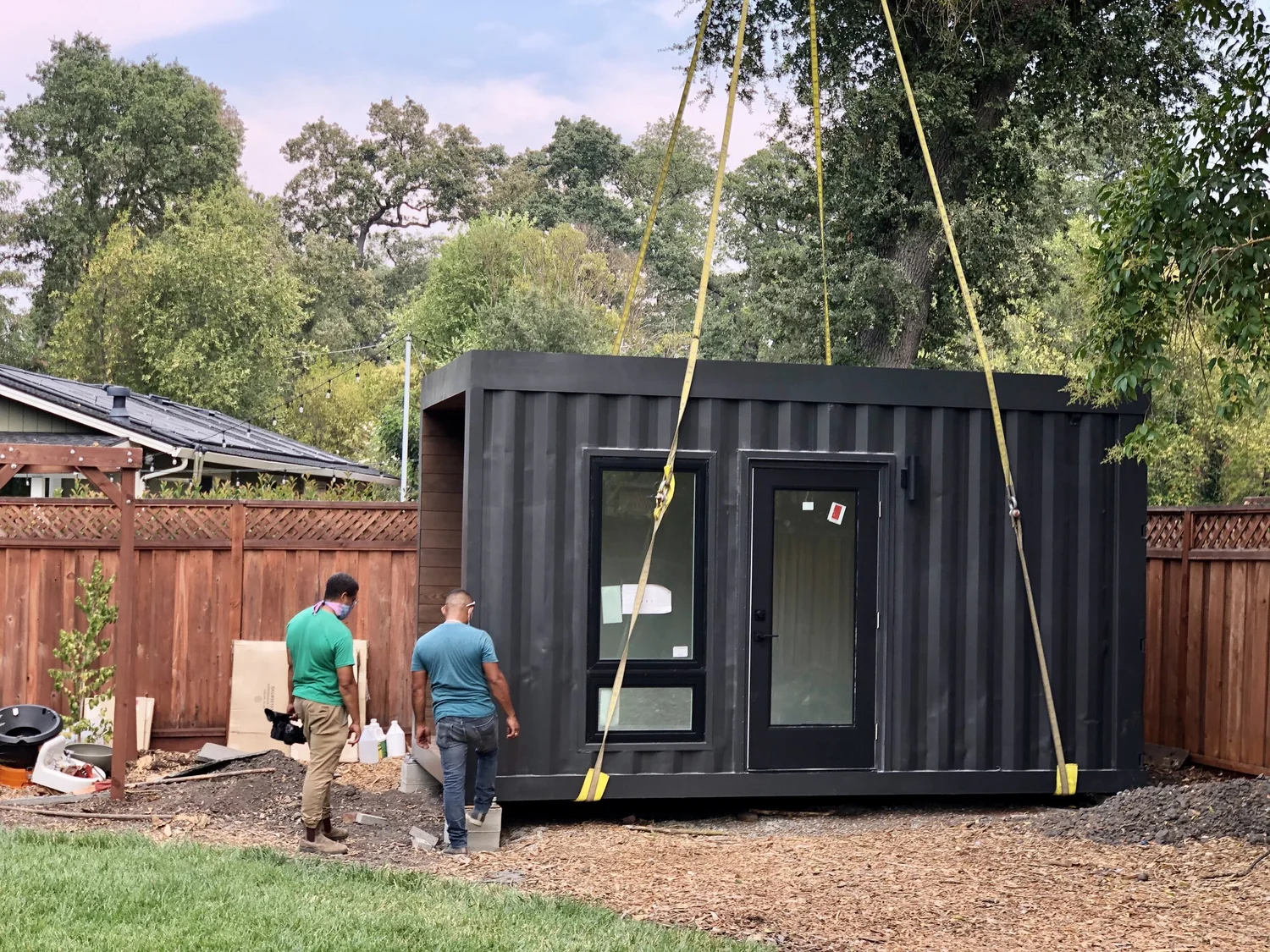
We build each unit in our factory in Lathrop, CA. It's delivered in a day and installed in about a week. The state oversees the factory build; your city inspects the foundation and hookups.
Not sure which one fits your yard?
We'll check your lot, delivery access, and local rules for free.
Can a backyard office lower your taxes?
It might, depending on how you work. Ask a tax professional before you count on it.
IRS Publication 587 (2025), Business Use of Your Home, says you can deduct expenses for "a separate free-standing structure, such as a studio, workshop, garage, or barn, if you use it exclusively and regularly for your business." The rules differ for business owners and employees.
Property taxes are a separate question. Your county assessor can tell you whether and how a new structure changes your assessment.
Frequently asked questions
Do I need a permit for a backyard office in California?
A one-story detached structure of 120 sq ft or less is exempt from a building permit under the 2025 California Residential Code, Section R105.2. Wiring usually needs an electrical permit, and zoning rules still apply. Check with your city first.
Can I put a bathroom in my backyard office?
Plumbing work needs a permit, and rules for bathrooms in accessory structures vary by city. Add a kitchen too, and it may meet California's definition of an ADU. Ask your planning department before you design it.
How many people work from home in 2026?
In September 2026, 21.9% of U.S. workers teleworked at some point during the survey week, according to the BLS.
Is a backyard home office tax-deductible?
IRS Publication 587 covers separate free-standing structures used exclusively and regularly for business. Whether you qualify depends on your situation. Ask a tax professional.
How much does a backyard office cost?
Bay Modular's 8' × 15' Backyard Studio costs $75,900 all in, permits and installation included (October 2026). The 256 sq ft Small Studio is $124,900.
Get a short commute to your backyard
Send your address. We'll check your lot and local rules and show you what fits. Free, with no obligation.
About Bay Modular Team
Bay Modular is a California factory-built housing manufacturer (HCD #1585366). We design and build backyard ADUs in our factory in Lathrop, CA, and install them across California. More about us
Sources
- BLS, Table A-41, telework status, September 2026, and series LNU0201B46B.
- BLS, American Time Use Survey – 2025 Results, June 25, 2026.
- Census Bureau, ACS 2024 1-year, Table DP03.
- Gov. Code § 66313, § 66311.5, § 66317; HCD ADU Handbook, March 2026.
- Building Standards Commission, 2025 California Building Standards Code; California Residential Code § R105.2.
- IRS, Publication 587 (2025).
- Bay Modular Pricing & Financing, October 2026.
Sources accessed October 8, 2026. General information, not legal or tax advice; confirm with your city's planning and building departments, your county assessor, and a tax professional.
