
What Bay Modular's free lot assessment covers, how each detail of your yard moves the price of an ADU, and what happens next.
The short answer
Bay Modular's free lot assessment is a review of your property before you spend a dollar. We study satellite imagery for rough measurements and access routes, mark the buildable and non-buildable parts of your yard, and check your city's zoning, setback, and building rules, plus any CC&Rs. It's free, with no obligation.
Cost of a Bay Modular lot assessment. No obligation to buy
permits, site work, foundation, crane and hookups included — fixed in writing before you sign
the most a city can require for side and rear setbacks on a new ADU (Gov. Code § 66314)
minimum crane clearance from power lines up to 50,000 volts under Cal/OSHA rules
ADU budgets rarely go wrong inside the factory. They go wrong in the backyard: at the oak nobody measured, the sewer line that's farther from the house than it looked, or the side yard that turns out to be too tight for the delivery.
On our 1 Bedroom ADU, the all-in price includes everything around the house — permits, site work, the foundation, the crane and hookups. So before we talk models, we look at your lot. Here's what that review covers and why each item moves your budget.
What does a free lot assessment include?
Three checks: we measure your lot and its access routes from satellite imagery, we mark where an ADU can and can't go, and we check the local rules that apply to your exact address.
- Satellite review. Rough measurements of your property and possible routes into your backyard.
- Buildable vs. non-buildable area. Where in your yard an ADU can and can't go.
- Local rules. Zoning for your address, setbacks, building requirements, and any covenants, conditions, and restrictions (CC&Rs).
Our planning and zoning team works with local planning and building departments to spot anything in your city's ordinance that differs from state ADU law.
Why does your lot change the price so much?
Because site work depends on your yard: permits, site prep, the foundation, delivery, utility hookups and installation. Our all-in price includes all of it — the assessment confirms it for your address, and we put your final price in writing before you sign.
Every Bay Modular price includes those lines, but your yard shapes the work behind them. The assessment finds those details before you sign. More in our guide to ADU costs in California.
| What we look at | Budget line it affects | In your all-in price |
|---|---|---|
| Distance to sewer cleanout, panel size | Utility connections | ✓ Included |
| Slope, drops, retaining walls | Foundation | ✓ Included |
| Trees, structures, buildable area | Site preparation | ✓ Included |
| Driveway width, power lines, access route | Delivery & crane | ✓ Included |
| Zoning, setbacks, CC&Rs | Planning & permits | ✓ Included |
Every line above is part of the all-in price on our Pricing & Financing page, fixed in writing after the free lot assessment.
How much of your yard can you actually build on?
Usually more than people think. California caps side and rear setbacks for a new ADU at four feet and protects your right to an 800 sq ft ADU.
No more than 4 feet for an attached or detached ADU.
Gov. Code § 66314(d)(7), HCD ADU Handbook, March 2026Lot coverage, floor area ratio, open space, and minimum lot size rules can't prevent an 800 sq ft ADU with 4-foot side and rear setbacks.
Gov. Code § 66321(b)(3)Cities must allow at least 16 feet for a detached ADU, and 18 feet within a half-mile walk of major transit.
Gov. Code § 66321(b)(4)State ADU law doesn't set one. Local standards and building and fire codes can.
HCD ADU Handbook, March 2026That last row is why we ask about the room between your house, the ADU, and your fences. Every Bay Modular model is 640 sq ft or smaller, well within the protected 800 sq ft.
Can your HOA's CC&Rs block an ADU?
No. California law voids CC&Rs that prohibit or unreasonably restrict an ADU on a lot zoned for single-family homes. An HOA can still apply limited objective standards, so we check what yours says.
"Such CC&Rs, including operating rules, are void and unenforceable."
California Department of Housing and Community Development, ADU Handbook (March 2026), on Civil Code §§ 714.3 and 4751
If you assumed your association would say no, take a second look. If your CC&Rs effectively ban ADUs, HCD encourages you to contact your city.
How will the ADU get into your backyard?
By truck and, on most lots, a crane. Satellite imagery shows us the likely route. Your driveway width, overhead lines, and trees decide whether that route actually works.
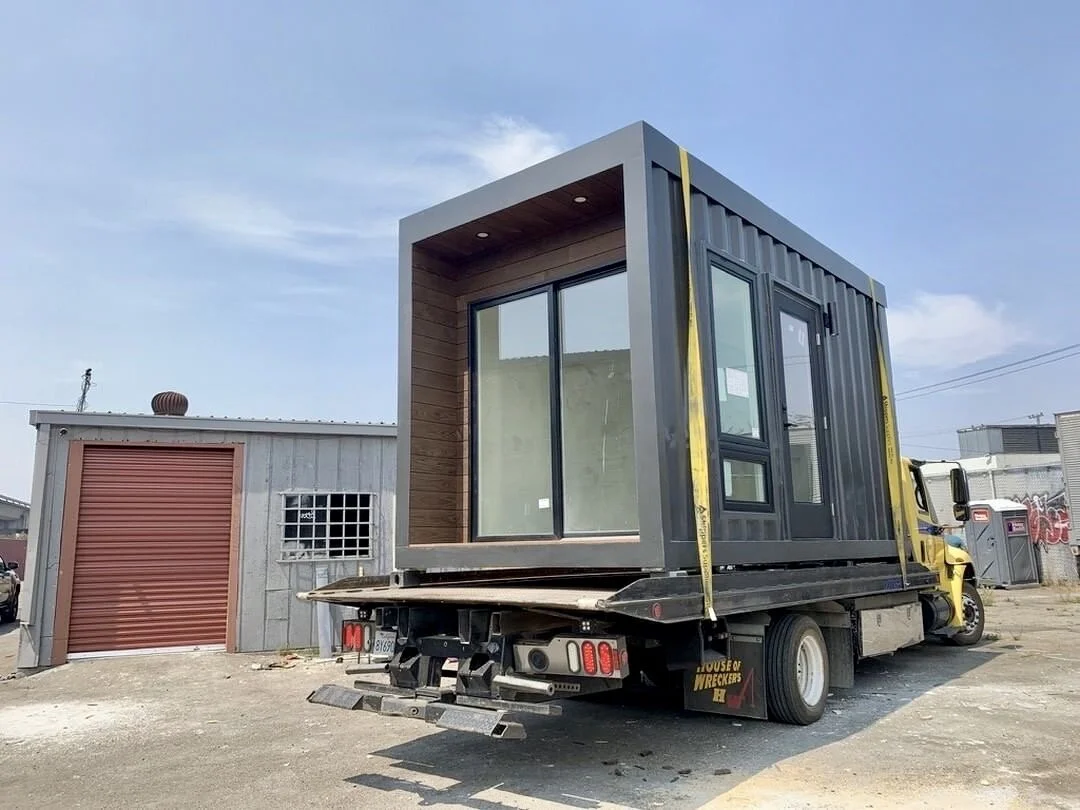
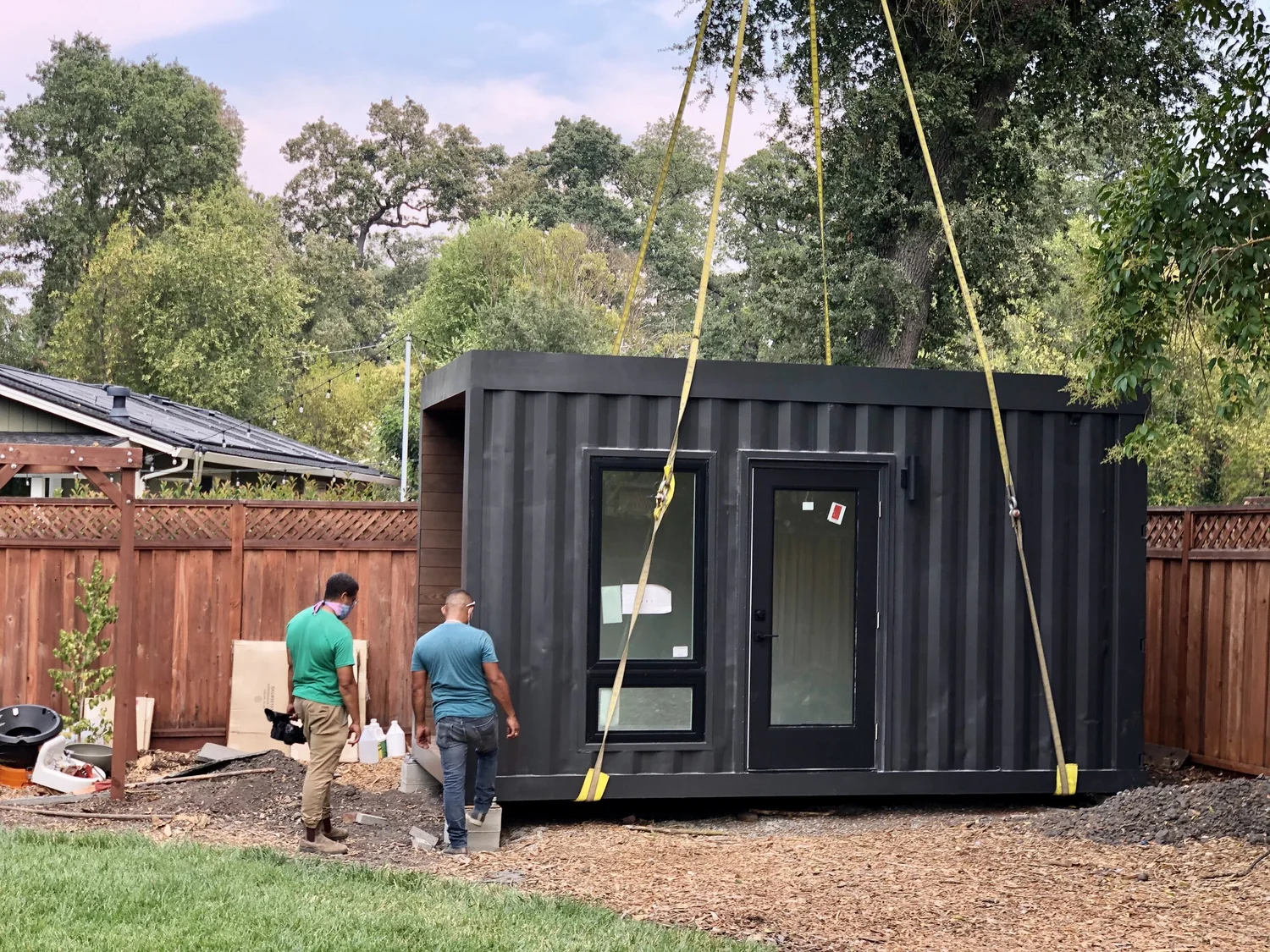
The finished unit is delivered in a day and installed in about a week. That depends on knowing in advance where the truck parks and where the crane sets up.
Watch out
Power lines matter. California's workplace safety rules prohibit swinging a load over energized high-voltage lines and require at least 10 feet of clearance for crane booms near lines up to 50,000 volts (Cal/OSHA, Title 8 § 2946). A pole or line in front of your house can change where the crane sets up, so tell us about it up front.
What can you tell us that a satellite can't?
Quite a lot. Satellite photos miss slopes, utilities, and what's under a tree canopy. The more you share in your form or on our call, the more accurate the assessment.
| Question | Why we ask |
|---|---|
| Is there a tree or other structure in your backyard? | It can sit in the footprint or in the crane's path. |
| Is there a slope, drop, or retaining wall we can't see? | It shapes the foundation design. |
| Is there a power line or telephone pole in front of your house? | It affects where the crane can set up. |
| Can you reach the backyard through a long driveway? How wide is it? | It shows how close a truck can get. |
| Which way do you want the ADU to face? | It sets the layout, the entry, and the view from your house. |
| How much space do you want between your house and the ADU? | Building and fire codes govern spacing between structures. |
| How far is it from your house to your rear fence, and between your side fences? | It shows which models fit within the setbacks. |
| Is there an easement on your property? | Someone else may have rights to that strip of land. |
| Where is the sewer cleanout closest to your backyard? | It sets the length of the sewer connection. |
| What size is your electrical panel? | The ADU's power runs from your main panel. |
Pro tip
Your panel's amp rating is usually printed on the main breaker. Check it, and measure your side yard with a tape, before you fill out the form. "I'm not sure" is a fine answer to the rest.
Why is the assessment free?
Because a good decision starts with knowing what fits. We'd rather find a problem before we quote a price than after you've committed.
Our models use standard sizes and components, so the house has a known price. The lot is the variable, and checking it first catches sizing and budget issues early.
It's also personal: you'll see this building every day. If another option suits your yard better, you should know that too.
Find out what fits in your backyard
Send your address and we'll start with your lot. Free, with no obligation.
What happens after the assessment?
You decide. If you move forward, we handle planning and permits, build your unit in our factory, and install it on your lot. All of that is included in the all-in price.
Permits
Your city has 15 business days to say whether your ADU application is complete, then 60 days to approve or deny it (Gov. Code § 66317).
Factory build
We build the unit in our Lathrop, CA, factory under state oversight. Bay Modular is a California factory-built housing manufacturer, HCD #1585366.
Delivery and setup
The unit is delivered in a day and installed in about a week. Your city inspects the foundation and the utility hookups.
Want to see the units first? Book a factory tour. Planning to rent? Try our rental & ROI calculator and rental guide.
Frequently asked questions
Is the lot assessment really free?
Yes. There's no charge and no obligation to buy. You'll learn what fits on your lot, how the unit can be delivered, and which local rules apply.
What do I need to send to get started?
Your address and what you'd like to build. Details like trees, slopes, driveway width, and panel size make the assessment more accurate.
Can my city say no to an ADU?
A city can apply objective standards like setbacks and height limits, but it must review ADUs without a public hearing and decide within 60 days of a complete application. Miss that deadline, and with an existing home on the lot the application is deemed approved (Gov. Code § 66317).
What if there's a power line near my backyard?
Tell us early. Cal/OSHA rules bar cranes from moving loads over energized high-voltage lines and require clearance around them, so a line can change where the crane sets up. Access routes are part of what we review in the assessment.
Start with your lot, not a guess
Send your address. We'll review your property, mark the buildable area and delivery access, and check your city's ADU rules. Free, with no obligation.
About Bay Modular Team
Bay Modular is a California factory-built housing manufacturer (HCD #1585366). We design and build backyard ADUs in our factory in Lathrop, CA, and install them across California. More about us
Sources
- California Department of Housing and Community Development (HCD), Accessory Dwelling Unit Handbook, March 2026 Accessed October 8, 2026.
- California Government Code §§ 66314, 66317, and 66321; Civil Code §§ 714.3 and 4751, as quoted in the HCD ADU Handbook, March 2026.
- California Department of Industrial Relations, Title 8 § 2946, Provisions for Preventing Accidents Due to Proximity to Overhead Lines. Accessed October 8, 2026.
- HCD, Factory-Built Housing: Inspections. Accessed October 8, 2026.
- Bay Modular Pricing & Financing, October 2026.
This guide is general information, not legal or financial advice. Local rules vary; confirm details with your city's planning department.
