
Is prefab a mobile home? Lower quality? Hard to finance? Eight common myths about prefab homes, each checked against California law and federal data.
The short answer
Most prefab fears come from mixing up modular homes with mobile homes. In California, a modular (factory-built) home follows the same building code as a site-built house, is inspected in the factory and on site, and sits on a permanent foundation. Two myths are partly true: prefab isn't automatically cheaper, and late changes are harder.
California factory-built homes follow the state building, energy, and green codes (Title 24)
In the factory by an HCD-certified agency, then on site by your city
Fannie Mae gives modular homes "the same treatment as site-built housing" (Feb. 2026)
permits, site work, foundation, crane and hookups included — fixed in writing before you sign
Only about 14,000 of the 1,005,000 single-family homes completed in the U.S. in 2025 were modular, according to the U.S. Census Bureau. That's roughly one in 70. So most people have never stood inside one — and myths fill the gap.
Below are eight common ones, checked against California law, the state housing department, Fannie Mae, and federal data. Where a myth is partly true, we say so.
Myth 1: "Prefab is just a mobile home"
Fact: California law separates them. The state's definition of factory-built housing "does not include a mobilehome" or a recreational vehicle (Health and Safety Code § 19971).
A manufactured home is built to a federal HUD code on a permanent chassis. A California factory-built home, often called modular, is built to the California Building Standards Code and set on a permanent foundation. Fannie Mae draws the same line: modular, prefabricated, panelized, or sectional housing "is not considered manufactured housing." See our guide to prefab types for a side-by-side table.
Myth 2: "Factory-built homes are built to a lower standard"
Fact: They follow the same code. California factory-built housing is designed to the same parts of Title 24 as site-built homes: building, residential, electrical, mechanical, plumbing, energy, and green building codes.
Every model's plans are approved by an HCD-certified Design Approval Agency. While the unit is built, an HCD-certified Quality Assurance Agency inspects it in the factory. Each unit then gets an HCD Insignia of Approval before it ships, and your city inspects the installation on site.
"Once assembled onsite, there is no practical difference between FBH and site-built residential structures."
— California Department of Housing and Community Development, Factory-Built Housing Handbook (HCD FBH 314)
Pro tip
Code compliance is the floor, not the ceiling. Quality still varies by builder. Ask to see units in production and a finished home before you sign.
Myth 3: "My city can reject a home just because it's prefab"
Fact: Cities keep control of zoning, setbacks, and design rules, but California law says those rules "shall not vary substantially" from what they require of other homes of similar size (Health and Safety Code § 19993).
HCD's FAQ says factory-built housing "can be installed where other similar types of dwelling units are built or exist." For a backyard ADU, state ADU law adds a deadline: your city has 60 days to approve or deny a complete application (Government Code § 66317). Our factory-built housing guide explains what the city does and doesn't review.
Myth 4: "Banks won't lend on prefab, and it won't appraise"
Fact: For loans sold to Fannie Mae, modular, prefabricated, panelized, and sectional homes get "the same treatment as site-built housing," as long as they're real property on a permanent foundation and meet local codes.
That's from Fannie Mae's Selling Guide (B2-3-02, February 4, 2026). For ADUs, the guide says the unit "can be site- or factory-built, including modular." Individual lenders add their own rules, so talk to a lender early. Manufactured (HUD-code) homes follow a separate set of Fannie Mae rules.
Myth 5: "Prefab is always cheaper"
Partly true. Manufactured homes cost much less per square foot than site-built homes. For modular homes, the house is only part of the bill, and we couldn't find a reliable recent study proving they're cheaper than site-built.
In 2024, a new manufactured home averaged $84.45 per square foot, while the structure of a new site-built home averaged $168.86 per square foot excluding land (U.S. Census Bureau). Those homes are built to different codes, so it's not a like-for-like comparison.
Our all-in price covers the home and everything around it — permits, site prep, foundation, delivery, crane, hookups and installation — from $75,900 for a Backyard Studio to $271,900 for a 2 Bedroom ADU.
What a factory does give you is a known price for the house itself. Before you compare quotes, make sure each one includes the foundation, crane, and utility trench. Our 2026 ADU cost guide shows what’s included.
Myth 6: "You can't change anything in a prefab home"
Partly true. HCD lists "ease of design customization" among factory-built housing's benefits, but the timing matters: plans are approved before the build, and changes after that need approval.
Under Health and Safety Code § 19981, a unit with the state insignia can't be modified before installation without HCD approval, or during installation without your city's approval. After it's installed, changes go through your local building department, the same as for any house.
What this means for you
Make your choices — layout, finishes, fixtures — before production starts. Changes after that need extra approvals, which can add time.
Myth 7: "Prefab homes waste energy"
Fact: California factory-built homes must meet the California Energy Code (Title 24, Part 6), the same energy rules as site-built homes. New detached ADUs also need solar under the 2025 Energy Code, unless an exception applies.
The California Energy Commission says the solar panels don't have to sit on the ADU itself: new modules can be added to a solar system on the same lot, including on the main house, if your utility allows the expansion.
Myth 8: "A prefab home isn't permanent"
Fact: California factory-built homes must sit on a foundation designed to the state building code, and HCD says that once assembled, they're "treated the same as site-built structures for the life of the structure."
The confusion comes from manufactured homes, which the federal definition describes as usable "with or without a permanent foundation" (24 CFR § 3280.2). Factory-built homes aren't registered or titled with HCD like vehicles, according to HCD's handbook.
What's the best way to judge prefab for yourself?
Look at one being built, and get a complete quote for your own lot. Both answer more questions than any article can.
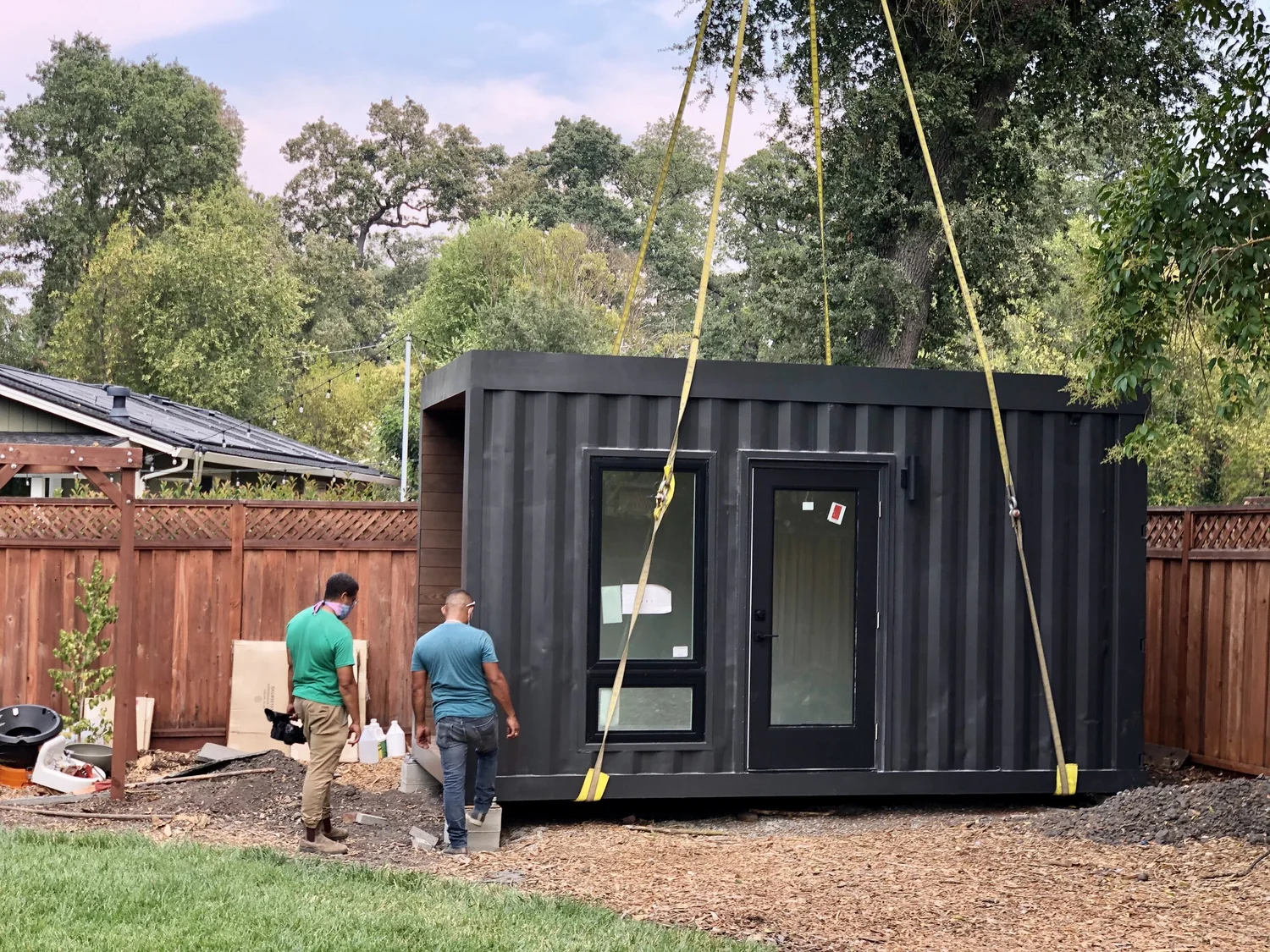
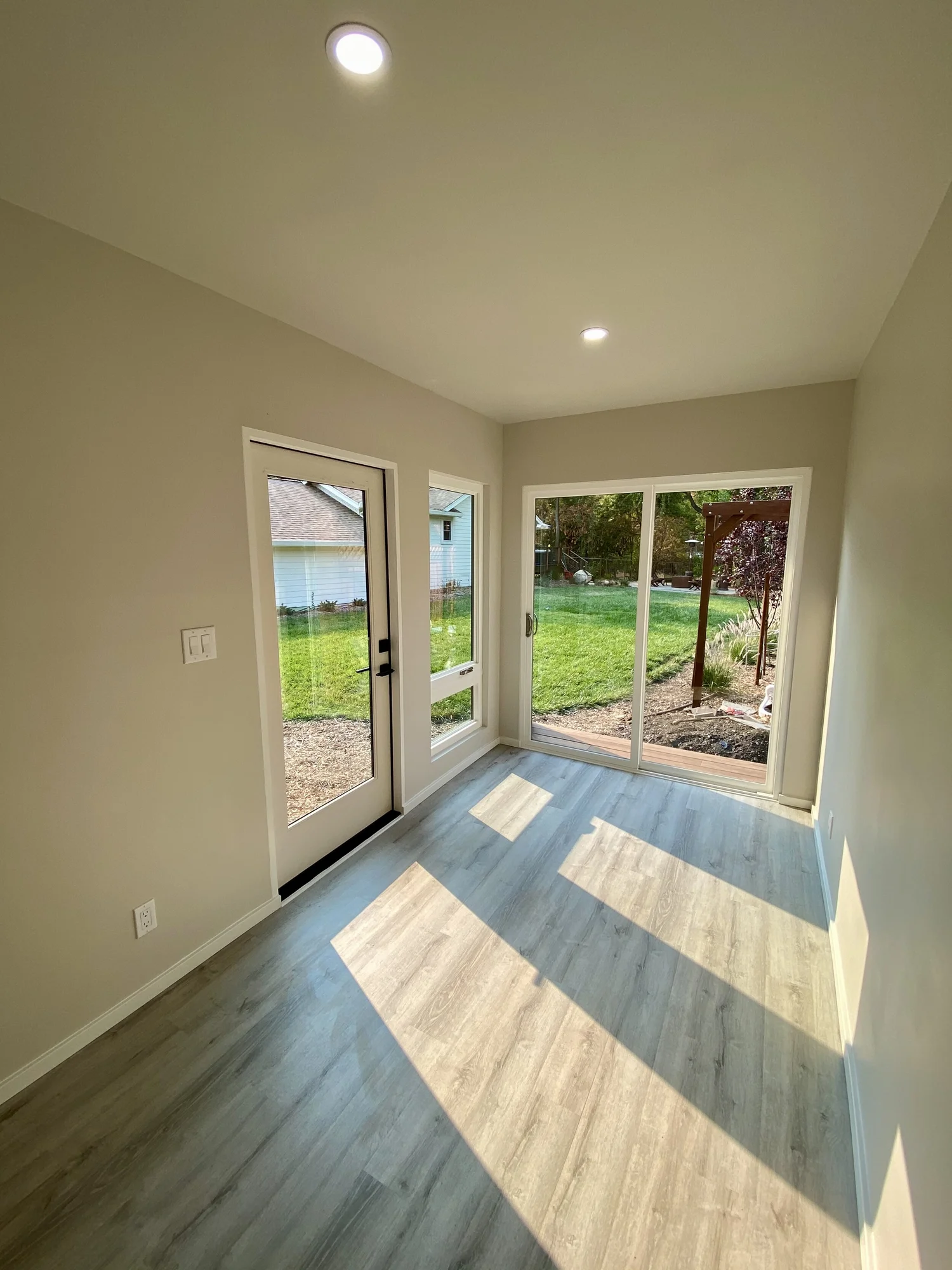
Bay Modular builds backyard ADUs in our factory in Lathrop, California (HCD #1585366). A finished unit is delivered in a day and installed in about a week. All-in prices run from $124,900 to $271,900, with permits, foundation, crane, and hookups included (Pricing & Financing).
See it with your own eyes
Tour our factory in Lathrop, or send your address for a free lot assessment. No obligation.
Frequently asked questions
Are prefab homes good quality?
In California, modular (factory-built) homes are built to the same building code as site-built homes and inspected in the factory by HCD-certified agencies, then on site by your city. Quality still depends on the builder, so visit the factory and see finished units.
Is a modular home the same as a mobile home?
No. California law excludes mobilehomes from the definition of factory-built housing. Mobile and manufactured homes follow a federal HUD code and are built on a permanent chassis; modular homes follow California's building code.
Do prefab homes hold their value?
We haven't found reliable resale data for California modular homes. What we can say: Fannie Mae treats modular homes like site-built homes for lending, as long as they're real property on a permanent foundation. Ask a local appraiser or real estate agent about your market.
Can my HOA or city ban a prefab ADU?
State law limits both. Local rules for factory-built housing can't vary substantially from those for similar homes (Health and Safety Code § 19993), and California's ADU law limits how HOAs can restrict ADUs. Check your city's ADU page for local standards.
Do factory-built ADUs need solar panels?
A new detached ADU does under California's 2025 Energy Code, unless an exception applies. The panels can be added to an existing system on the same lot, such as on the main house.
Still have a prefab question?
Send your address. We'll check your lot and your city's ADU rules and answer it with your numbers. Free, with no obligation.
About Bay Modular Team
Bay Modular is a California factory-built housing manufacturer (HCD #1585366). We design and build backyard ADUs in our factory in Lathrop, CA, and install them across California. More about us
Sources
- California Health and Safety Code § 19971, § 19981, § 19993. Accessed October 8, 2026.
- HCD, Factory-Built Housing program; Factory-Built Housing Handbook (FBH 314) and FAQ (FBH 315), rev. 11/20.
- HCD, Accessory Dwelling Unit Handbook, March 2026 (Gov. Code § 66317; HOA limits).
- Fannie Mae Selling Guide, B2-3-02 (February 4, 2026) and B2-3-04 (October 8, 2025).
- U.S. Census Bureau, Characteristics of New Housing (construction method, 2025) and Manufactured Housing Survey (cost and size comparisons, 2024).
- Electronic Code of Federal Regulations, 24 CFR § 3280.2.
- California Energy Commission, 2025 Energy Code ADU FAQs. Accessed October 8, 2026.
- Bay Modular Pricing & Financing, October 2026.
This guide is general information, not legal, tax, or financial advice. Confirm details with your city's planning and building departments, your HOA, and a lender.
